
When the part isn't made any more.
Broken, discontinued, or only sold as a whole assembly. We measure it, draw it and 3D print a new one here on the Gold Coast.
And if buying the original is the better answer, we'll tell you.
Send photos of your part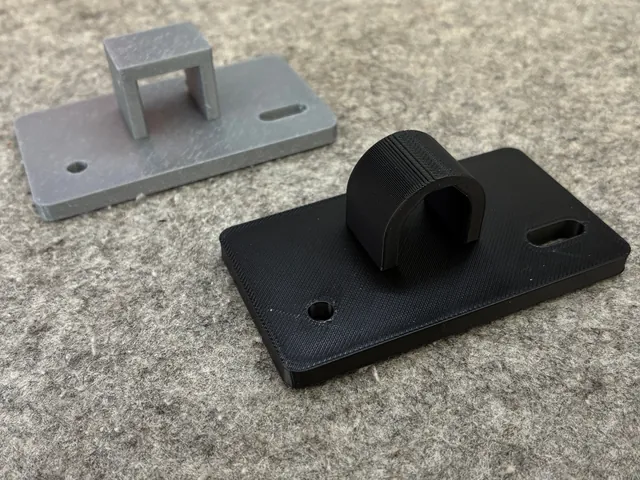
Step one
What to send.
A few good photos and a few words are enough to start. The more of these you can give us, the fewer questions we'll need to ask.
- Photos from a few angles, with a ruler or tape measure in shot. For a flat part, our printable photo sheet lets us measure it straight from the photo.
- The broken pieces, if you still have them: a photo first. We may ask you to post them (postage is on the quote), and we'll send them back with your new part.
- Where it fits: a photo of the gap it came out of, and what it connects to.
- Where it lives: on a boat (salt, spray and sun), in a ute or 4WD (a hot cab, vibration, fuel or oil), outdoors in full sun, or inside near heat or cleaners. And whether anyone could get hurt if it failed. If they could, it's probably one we don't take.
- How it broke, if you know. It tells us what the new one needs to do better.
- The make and model of what it came off, or a part number, if there is one.
- A 3D file, if one exists. It saves the drawing time.
How it goes
From the broken part to the new one.
Show us
Send the photos and a few words. Mike replies within two business days.
We check it
We tell you straight whether it can be remade, whether you're better off buying the original, or whether it shouldn't be copied. If the original keeps breaking in the same place, we can change the design rather than copy the weak spot. Then you get a written quote.
We test the fit
We draw it, then print just the critical bit first, like the clip, the tab or the holes. You check it against the real thing before the whole part is made. If it needs another go, we'll quote it before we make it.
You get it
Posted or couriered to you. We keep the design on file, so the next one is simple.
Good fits, and not for us
What makes a good replacement part.
Plastic parts that hold, cover, guide, space or clip are usually good candidates. Parts that keep someone safe are not.
Usually good
- Clips, catches and latches
- Covers, caps and end plugs
- Knobs, handles and buttons
- Brackets, mounts and spacers that don't carry real load
- Guides, holders and small housings
Jobs we don't take
- Structural or load-rated parts
- Safety-critical vehicle parts, like brakes, steering or seatbelts
- Anything for lifting, or anything that holds pressure
- Medical parts
- Copies of logos or trade marks
Straight up
What to expect from a 3D printed part.
So nothing surprises you when it arrives.
- You'll see layer lines. Fine ridges from building it up layer by layer are normal, not a fault.
- Fit is checked, not promised to a number. We don't quote a ± figure until we've measured our own. Where fit matters, we print the critical bit first and you check it.
- Strength depends on direction. A printed part is strong along its layers and weaker across them, so we print it the way round that suits the job.
- Not for anything that keeps someone safe. The jobs we don't take are listed on the homepage.
- Honest dates. The date on your quote is our best estimate. If it's going to slip, we'll tell you.
Good fits
The kinds of jobs we're set up for.
- Boat and marine fittings (in PETG; tell us if it sits in full sun)
- 4WD and ute trim, clips and covers
- Appliance spares like knobs, catches and covers
- Workshop and garage holders, guides and jigs
- Home repairs: blind brackets, catches, end caps
- Enclosures and project boxes
- Small batches of a part that works
If yours isn't here, it's still worth asking.
See how it's done
One we've made, start to finish.
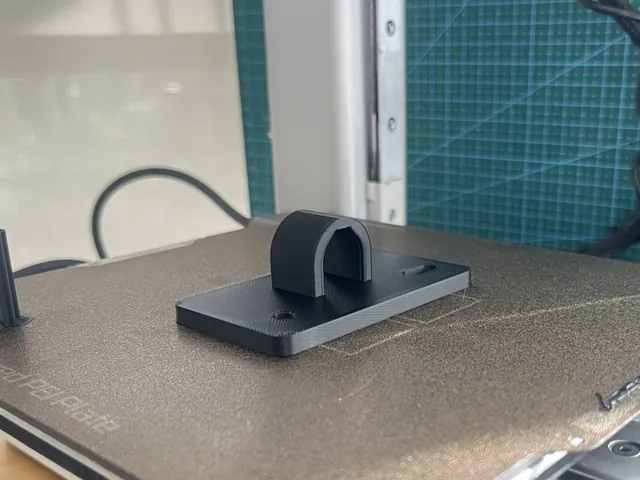 Example job
Replacement part · PLA
A cable guide for an old machine
Drawn from scratch to match the mounting holes, then made better: rev B prints with no sag, no supports and no strings.
Read the story and watch the timelapse →Straight answers.
Will it be as strong as the original? Not always. A 3D printed part is strong along its layers and weaker across them, so we print it the way round that suits the job and tell you what to expect. If it carries real load, it isn't one for us.
Which material? Most replacement parts are PETG or PLA. PLA can soften in a hot car or on a boat in summer, so anything that lives outside usually goes in PETG. For a dashboard, or anything in full sun all day, tell us and we'll check. The materials guide has more.
What about a part from a big brand? If you send us a part to copy, you confirm you have the right to have it made, and we don't copy logos or trade marks. Our terms say more.
Got a part nobody makes any more?
Send a few photos and a few words. We'll tell you straight if we can make it.